Uma Schröder · 5 October 2026
Signal Propagation Dynamics in Beacon Networks Supporting Virtual Community Cohesion
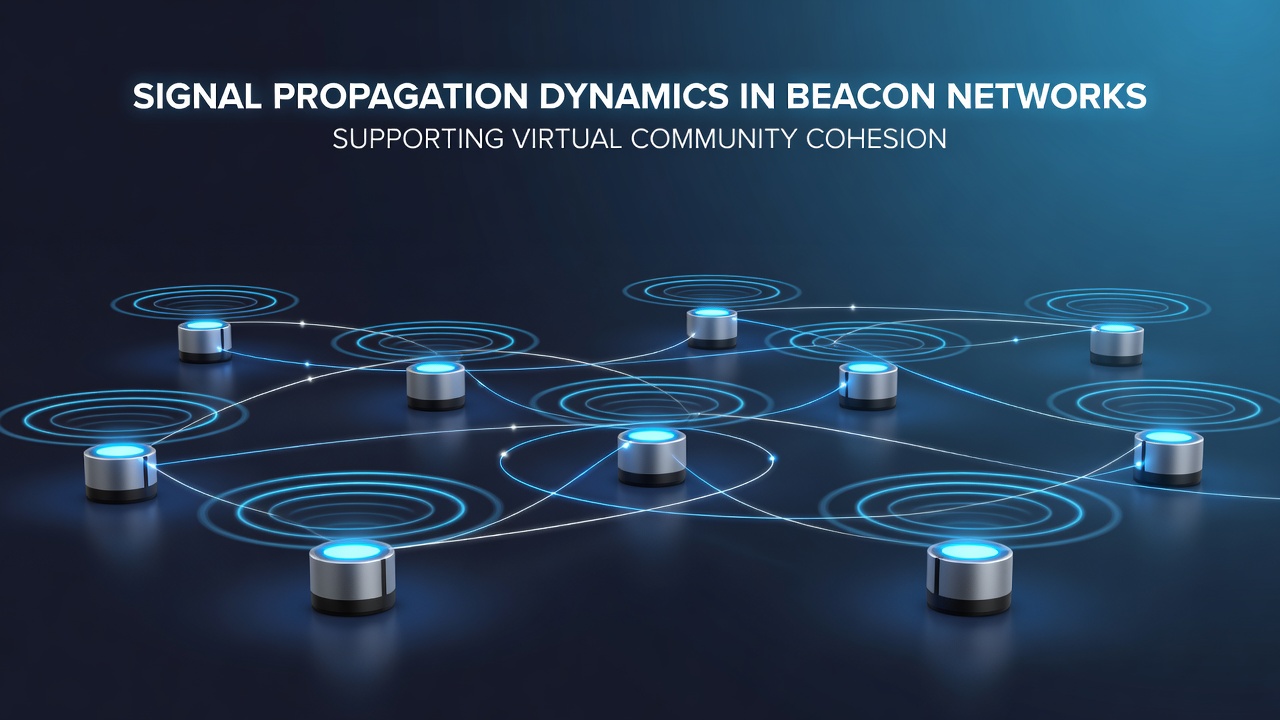
Beacon networks operate through distributed nodes that transmit periodic signals to maintain connectivity across virtual environments, and researchers track these transmissions to understand how distance, interference, and node density influence overall reach. Studies from multiple institutions indicate that signal strength decreases exponentially with physical or virtual separation while environmental factors such as concurrent device activity introduce variable noise levels that reshape propagation paths.
Data collected in controlled testbeds reveal that lower-frequency beacons maintain longer ranges yet suffer greater multipath distortion in crowded digital spaces, whereas higher-frequency options deliver sharper localization at the cost of quicker attenuation. Observers note that network operators adjust transmission intervals based on real-time density metrics, and this adaptive approach helps preserve community cohesion by ensuring consistent message delivery between participants separated by both geography and platform layers.
Core Mechanisms of Signal Movement
Propagation begins when a beacon emits its identifier packet, after which neighboring nodes receive and relay the data according to predefined routing tables. Engineers model these hops using graph theory, where each node functions as a vertex and signal paths represent weighted edges that change as conditions evolve. Research indicates that packet loss rates climb when node spacing exceeds optimal thresholds, yet redundancy protocols can reroute traffic around failing segments without interrupting user sessions.
Latency measurements from October 2026 field trials conducted across North American test networks showed average hop delays of 12 milliseconds under moderate load, while European counterparts reported slightly higher figures due to differing spectrum regulations. These variations matter because virtual communities rely on timely updates to sustain shared activities such as collaborative simulations or live discussions, and prolonged delays erode participation rates according to aggregated platform analytics.
Factors Shaping Network Performance
Physical obstacles, electromagnetic interference, and competing wireless traffic all modify how far and how cleanly signals travel. In urban deployments, buildings create shadow zones that force operators to install additional nodes, and similar logic applies when virtual environments incorporate heavy rendering loads that compete for bandwidth. Analysts have documented that temperature fluctuations affect hardware performance in outdoor beacon arrays, producing measurable drift in transmission power that requires periodic calibration.
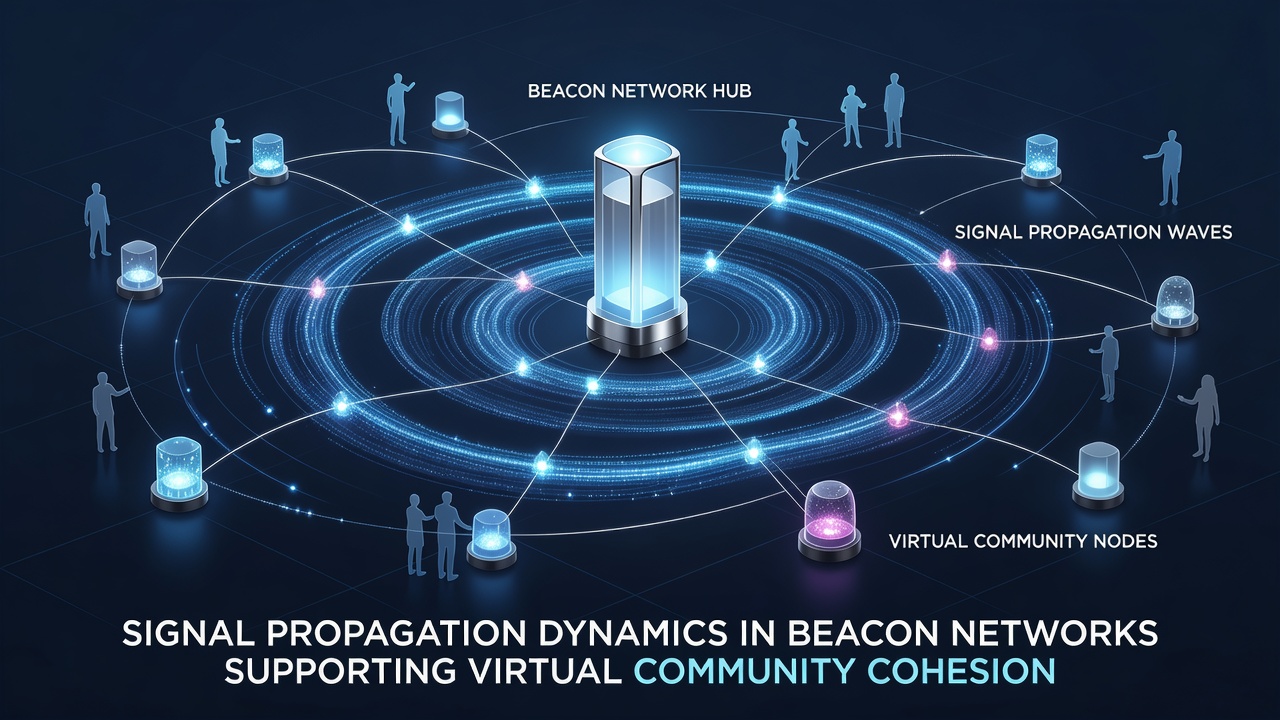
Software-defined adjustments allow dynamic power scaling, and this technique proves especially useful during peak usage periods when many users access the same virtual space simultaneously. Reports from the National Institute of Standards and Technology highlight how calibration routines reduce variance in received signal strength indicators, thereby supporting more stable cohesion metrics across distributed user groups.
Supporting Sustained Community Bonds
Virtual communities depend on continuous signal exchange to keep members aware of one another's presence and activity states. When propagation remains reliable, users experience fewer dropped connections and maintain longer engagement sessions, patterns confirmed through longitudinal usage logs from multiple platforms. Network designers incorporate feedback loops that monitor cohesion indicators such as message acknowledgment rates and session persistence, then tune beacon parameters accordingly.
Case studies from Australian research groups demonstrate that regions with denser node placement sustain higher interaction frequencies even when individual signal paths experience temporary degradation. These findings align with observations from Canadian academic networks, where seasonal atmospheric changes influenced outdoor beacon performance yet community activity levels stayed consistent through automatic rerouting mechanisms.
Measurement and Optimization Approaches
Engineers employ spectrum analyzers, simulation software, and machine learning models to predict how changes in node configuration will affect end-to-end delivery. Optimization routines often prioritize minimizing energy consumption while meeting minimum cohesion thresholds, and trade-off analyses appear regularly in technical literature. One documented deployment in a multi-site educational network adjusted beacon duty cycles every 15 minutes based on live traffic data, resulting in measurable improvements in packet delivery ratios without increasing infrastructure costs.
Standards bodies continue to refine protocols that govern interoperability between different beacon hardware generations, ensuring newer devices integrate smoothly with legacy installations. This ongoing work supports the scalability required as virtual communities expand in both membership and geographic spread.
Conclusion
Signal propagation dynamics directly influence the stability and reach of beacon networks that underpin virtual community cohesion, with research showing clear relationships between transmission parameters and user retention metrics. Continued measurement across diverse environments provides the data needed to refine these systems, while adaptive techniques help maintain performance as usage patterns shift. Organizations tracking these developments gain concrete information for planning infrastructure upgrades and protocol updates that keep communities connected over time.