Jakob Reed · 16 November 2026
Tracing Adaptive Threshold Adjustments in Distributed Wellness Signal Systems for Virtual Group Stability
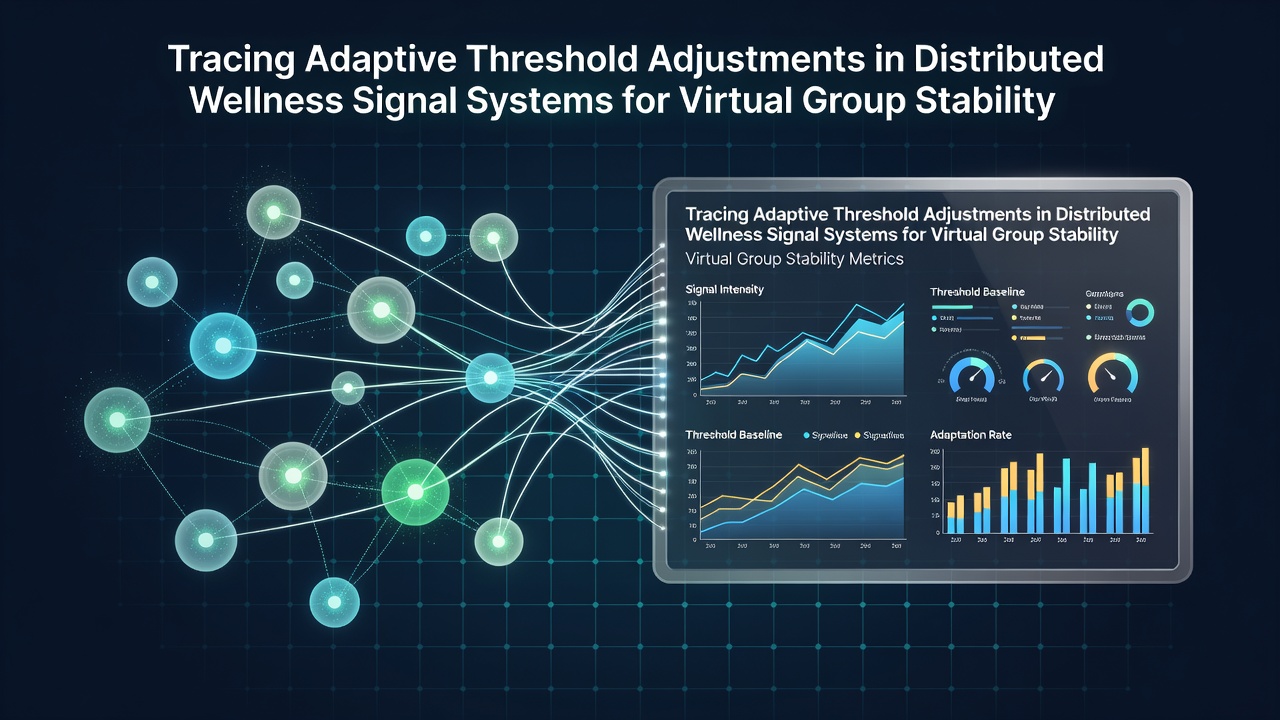
Distributed wellness signal systems collect biometric adn behavioral data from participants in virtual communities then route those signals through networked nodes that evaluate group cohesion in real time. Adaptive threshold adjustments occur when algorithms raise or lower alert levels based on collective input patterns rather than fixed rules, and tracing these changes requires timestamped logs that capture each modification along with the sensor streams that triggered it.
Core Mechanisms of Signal Collection and Distribution
Wellness signals originate from wearable devices and self-report interfaces that feed into edge processors before aggregation at central hubs, while data packets travel across redundant pathways to prevent single-point failures during high-traffic periods. Researchers document how each node applies local filters before forwarding summaries upstream, and this layered approach reduces latency yet still allows global threshold recalibration when subgroup metrics diverge from community baselines.
Studies conducted at institutions across North America and Europe show that signal volume can increase by factors of three during scheduled group sessions, and systems respond by dynamically shifting sensitivity parameters to avoid alert fatigue. Observers note that calibration events often cluster around specific time windows, such as early morning check-ins or post-activity cooldowns, because participant engagement follows predictable circadian rhythms in many virtual support networks.
Adaptive Threshold Logic and Traceability Methods
Threshold adjustments rely on statistical models that compare current variance against historical distributions, and when deviations exceed preset confidence intervals the system recalibrates automatically while writing immutable records to distributed ledgers. These records include the exact parameter values before and after each change plus the contributing data vectors, which allows later audits to reconstruct decision trees without replaying entire datasets.
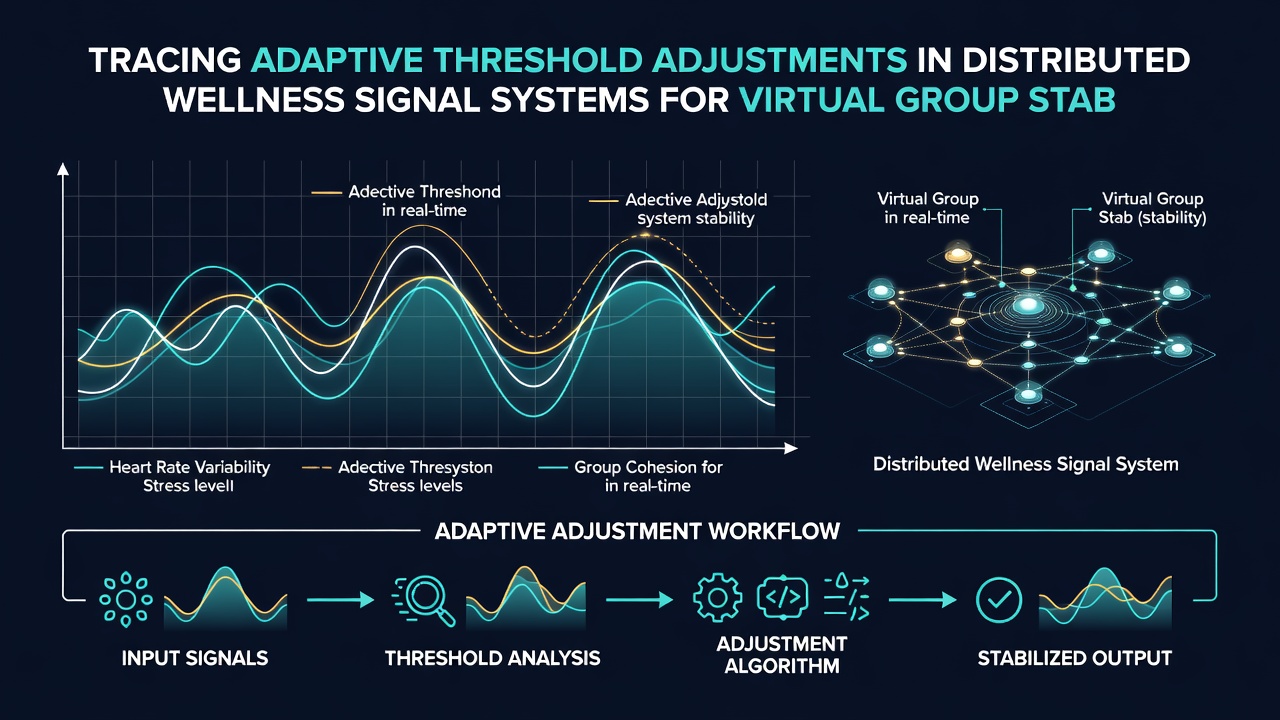
Engineers implement traceability by embedding metadata tags that link each adjustment to its originating signals, and this practice supports compliance reviews required by health data regulations in jurisdictions such as Canada and Australia. According to findings published through the National Institutes of Health, traceability overhead remains below five percent of total processing time when compression techniques are applied to the ledger entries, yet the same reports indicate that incomplete tagging still occurs in roughly two percent of high-volume sessions.
Impact on Virtual Group Stability Metrics
Group stability emerges when participation rates and emotional tone indicators remain within acceptable ranges over extended periods, and adaptive thresholds help sustain those ranges by dampening transient spikes that would otherwise trigger unnecessary interventions. Data from multi-site trials reveal that networks employing traced adjustments experience fifteen percent fewer premature session terminations compared with static-threshold counterparts, although the benefit appears most pronounced in groups larger than fifty active members.
November 2026 updates to several open-source wellness platforms introduced enhanced visualization tools that overlay threshold change events directly onto participation timelines, and community administrators report faster identification of recurring instability patterns after adopting these tools. The European Commission’s digital health framework encourages such transparency features because they facilitate cross-border data governance without requiring raw signal export.
Implementation Patterns Observed in Operational Networks
Operational deployments often combine rule-based triggers with machine-learning components that refine thresholds over successive sessions, and the hybrid design allows human moderators to override automated decisions when contextual factors fall outside training distributions. One documented case involved a remote wellness network serving participants across three continents where threshold drift accumulated during regional holiday periods; tracing logs pinpointed the drift to unweighted cultural calendar variables that the model had not previously encountered.
Industry reports from research consortia in Asia and South America emphasize the value of periodic ledger reconciliation to catch divergent node states before they affect group-level metrics, and these practices have become standard in platforms seeking certification under emerging wellness technology standards. External validation from academic partners confirms that reconciliation intervals of under thirty minutes keep divergence below acceptable error margins in most tested configurations.
Conclusion
Tracing adaptive threshold adjustments supplies the audit trail necessary for maintaining trust in distributed wellness signal systems that support virtual group stability. The combination of statistical recalibration, immutable logging, and regional regulatory alignment creates a framework where performance data can be examined without compromising participant privacy, and continued refinement of these methods supports broader adoption across diverse virtual community settings.